How the Silicon Layer Is Changing AI Software Engineering
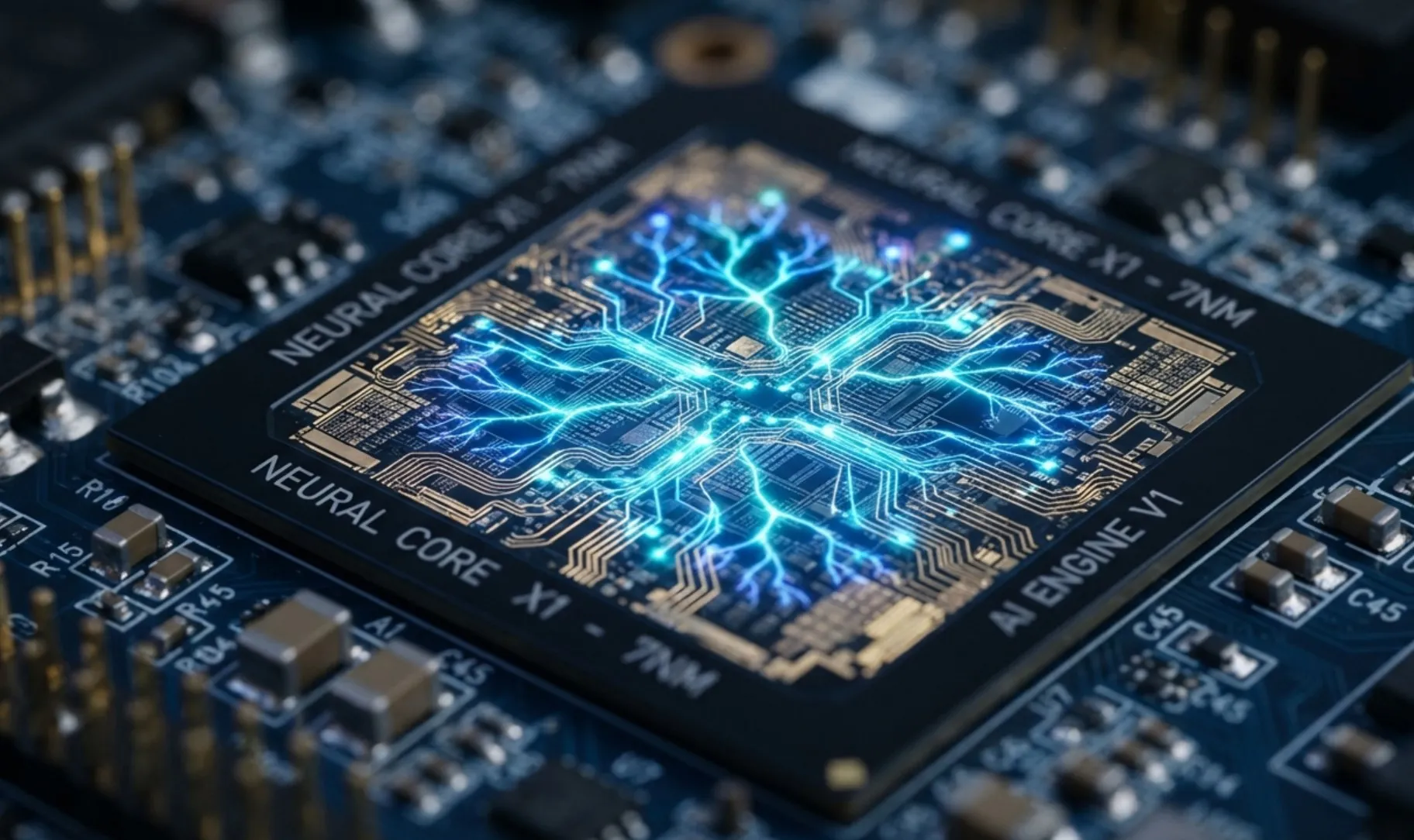
For decades, software engineers could mostly ignore what happened at the chip level. The operating system, the compiler, and the cloud abstracted away the hardware. If the code worked, that was usually enough. With AI, especially large language models, that mental model is breaking down. The reason is simple. AI systems are too large, too compute hungry, and too sensitive to hardware limits to treat silicon as an invisible layer. Memory bandwidth, compute capacity, power usage, and latency now shape what software can do, how fast it runs, and how much it costs. That means software engineers are no longer just writing code for a machine. They are increasingly making decisions about the machine itself.
Step-by-Step Guide
- Determine the specific hardware accelerator available for your AI workload.
- Select a high-level framework (like PyTorch or TensorFlow) that supports your hardware's silicon-layer software.
- Profile your model's execution to identify memory bottlenecks and inefficient kernel operations.
- Utilize hardware-specific compilers (e.g., TensorRT) to optimize the model for inference deployment.
The old abstraction is cracking
For most of modern computing, hardware details were somebody else’s problem. Developers wrote software, and the lower layers handled the rest. That worked because traditional applications were relatively predictable and could be made to run across many different systems with little extra thought.
AI changed that. Large models do not behave like ordinary software workloads. They are heavy, memory intensive, and often expensive to run. A model that does not fit comfortably in GPU memory may require a different deployment strategy altogether. A workload that looks fine on paper may become slow or costly once it meets real hardware limits.
This is why the abstraction is breaking. Engineers cannot afford to ignore the silicon anymore, because the silicon is now part of the product experience.
Hardware now shapes software design
The hardware landscape for AI is already influencing how engineers build systems. GPUs remain the most common option, and NVIDIA has pushed AI specific capabilities that make modern models run more efficiently. But even within GPUs, the generation matters. Software that performs well on one class of hardware may behave very differently on another.
Other chip approaches push the idea even further. Wafer scale systems like Cerebras collapse part of the usual memory bottleneck by placing massive amounts of compute onto a single chip. Deterministic inference systems like Groq optimize for predictable latency. Cloud TPUs are tightly tuned for a specific ecosystem. Edge processors from companies like Apple and Qualcomm bring AI closer to the device, which changes the design constraints again.
Each of these choices affects the software stack. Different hardware means different tradeoffs, different performance profiles, and different deployment assumptions. The chip is no longer just infrastructure in the background. It is part of the engineering decision.
Software engineers are becoming hardware aware
This shift is creating a new kind of software engineer. Instead of thinking only about code structure and APIs, engineers now have to think about batch sizes, memory usage, parallelism, throughput, and inference cost. Those decisions used to live much lower in the stack. Now they show up directly in product design.
That does not mean every developer needs to become a chip designer. It does mean the best engineers will understand enough hardware to make smarter decisions. They will know when a general purpose GPU is enough, when a specialized inference provider makes sense, and when the architecture of the application itself needs to change because of hardware constraints.
This is the heart of the new discipline. Software is becoming more hardware aware because AI forces it to be.
Co design is becoming the norm
One of the biggest changes in AI engineering is that hardware and software teams can no longer work in isolation. The best results come from co design, where both sides think about the full stack together. Software teams need to understand the limits of the silicon, and hardware teams need to understand the workloads the software is trying to run.
That collaboration changes everything. Choosing between commodity GPUs and a specialized inference provider is not just a procurement decision. It can change architecture, deployment strategy, latency expectations, and even the user experience. A model that works beautifully on one system may need to be rebuilt or rethought for another.
As AI systems get more demanding, this kind of coordination will become less optional and more normal.
Why this matters for engineers
For engineers, the biggest takeaway is that performance is no longer just about clean code. It is about how code interacts with hardware. A brilliant design can still fail if it ignores memory limits, latency constraints, or chip specific behavior.
That makes hardware literacy a major advantage. Engineers who understand the silicon layer will make better architecture decisions, avoid expensive mistakes, and build systems that are easier to scale. They will also be better at talking to infrastructure teams, cloud vendors, and product leaders about the real cost of a design choice.
This is especially important for students and early career developers. Most computer science programs still separate hardware and software too neatly. In the AI era, that split is less useful. The people who can connect the two will stand out.
The career shift ahead
The most valuable engineers in the next decade may not be purely software people or purely hardware people. They will be hybrids. They will understand how models behave, how chips shape performance, and how to design systems that work across both layers.
That hybrid skill set is still rare, which is exactly why it matters. Employers need people who can bridge the gap between code and silicon, especially as AI systems become more specialized and more expensive to run.
If software once meant writing for a machine you did not have to think about, AI is changing that forever. The machine is back in the conversation. And that changes the craft of engineering itself.
Where this is going
The trend is not slowing down. Silicon will keep becoming more specialized for AI workloads. Software will become even more sensitive to hardware differences. More systems will adapt themselves to the chip they are running on, rather than assuming every machine is the same.
That means the line between hardware and software will continue to blur. The engineers who understand that early will have a real edge.
The abstraction is not coming back. The future belongs to people who can build for both the code and the chip.
Frequently Asked Questions
What is silicon-layer AI software?
It refers to the low-level compilers, drivers, and frameworks (like CUDA or ROCm) that translate high-level AI models into instructions that specialized hardware (GPUs/TPUs) can execute efficiently.
Why is the silicon software layer a bottleneck?
Optimizing AI workloads for specific hardware architectures is incredibly complex. A lack of robust software support can severely limit the performance of otherwise powerful AI chips.
Can I run AI models without NVIDIA CUDA?
Yes, alternatives like AMD's ROCm and Apple's Metal Performance Shaders are maturing, though CUDA remains the industry standard for ease of use and performance.
Understanding hardware limits is just one part of the new engineering mindset. Learn more about how AI is shifting software development from deterministic code to probabilistic systems.
Read ArticleAre you a student looking to develop these hybrid skills? Discover how practical, system-level projects can help you stand out in the AI talent shortage.
Read Article